
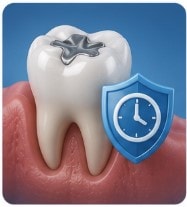
It depends on the filling material. Composite (tooth-colored) fillings harden immediately under the curing light, so you can eat as soon as the anesthesia wears off — usually 1–2 hours. Amalgam (silver) fillings take 24 hours to fully harden, so you should avoid chewing on that side until the next day.
What You'll Learn
Composite vs. Amalgam: Different Wait Times
The type of filling material determines how soon you can eat. Composite (tooth-colored) fillings are hardened immediately during the procedure using a special curing light. By the time you leave the chair, the filling is fully set. You can eat as soon as the local anesthesia wears off — typically 1–2 hours after the appointment.
Amalgam (silver) fillings are a metal alloy that hardens through a chemical reaction over time. Although they feel solid when you leave, they continue to harden for up to 24 hours. During this time, biting down with full force can distort the filling or cause it to crack. Avoid chewing on that side for 24 hours after an amalgam filling.
At Merchants Walk Dental, we place tooth-colored composite fillings — so in most cases, you can eat normally once the numbness is gone.
Why You Should Wait for the Anesthesia to Wear Off
Even with a composite filling that is fully hardened, you should wait until the anesthesia wears off before eating. When your mouth is numb, you cannot feel normal sensations — including pain. This means you could accidentally bite your cheek, lip, or tongue without realizing it. You also cannot accurately judge how hard you are biting, which can put excessive pressure on the new filling.
The anesthesia typically wears off within 1–3 hours depending on the type used and how much was administered. If you are hungry, stick to soft foods on the opposite side of your mouth until you have full sensation back.
What to Eat and Avoid After a Filling
Once the anesthesia has worn off and you are ready to eat normally, most foods are fine. However, for the first 24 hours, it is wise to be gentle. Good choices include soft foods like yogurt, eggs, pasta, soup, and mashed potatoes, as well as lukewarm foods and beverages.
Avoid for the first 24 hours: very hard foods (ice, hard candy, nuts, crusty bread), very sticky foods (caramel, taffy, gummy candy) that can pull at the filling, very hot or very cold foods and beverages, and chewing on the filled side if you have an amalgam filling.
After 24 hours, you can return to your normal diet.
Why Your Bite May Feel Off
It is common to feel like your bite is slightly off after a filling — like the filled tooth is hitting before the others. This happens because the filling material was placed while your mouth was open and numb, making it difficult to perfectly calibrate the bite.
A slightly high bite usually resolves on its own within a day or two as the filling settles. If it still feels off after 2–3 days, or if you have pain when biting, call your dentist. A simple bite adjustment — which takes just a few minutes and requires no anesthesia — can correct it. Do not ignore a persistently high bite, as it can cause soreness in the jaw and surrounding teeth.
Frequently Asked Questions
Questions About Your Filling?
Our team is happy to answer any questions about your new filling and what to expect during recovery.