
Root Canals in Marietta, GA | In-Office – East Cobb Dentist

Root Canal Therapy
Tooth pain doesn't have to control your life. If you're experiencing severe tooth pain, lingering sensitivity, swelling, or discomfort while chewing, a root canal may be able to relieve the infection while preserving your natural tooth.
While some complex cases may require referral to an endodontic specialist, many routine root canal treatments can be completed right here in our office. We serve patients from Marietta, Roswell, Alpharetta, Sandy Springs, Kennesaw, Woodstock, and Atlanta.
Signs You May Need a Root Canal
Not every toothache means you need a root canal — but certain symptoms are warning signs that the nerve or pulp inside a tooth may be infected or damaged. If you're experiencing any of the following, it's worth scheduling an evaluation sooner rather than later. Catching an infection early can mean the difference between saving and losing a tooth.
Tooth Pain
Persistent or throbbing pain — especially pain that wakes you up at night or worsens when you bite down — is one of the most common signs of an infected or inflamed dental pulp.
Sensitivity
Lingering sensitivity to hot or cold that doesn't go away within a few seconds may indicate nerve or pulp damage. Normal sensitivity fades quickly; infected or inflamed pulp sensitivity lingers.
Swelling
Swelling of the gum tissue around a tooth, or swelling in the jaw or face, can indicate an abscess — a pocket of infection that requires prompt treatment.
Infection
A pimple-like bump on the gum (called a fistula or sinus tract), a bad taste in your mouth, or visible drainage near a tooth are signs of active infection that won't resolve on its own.
Some patients have no symptoms at all — an infection can be detected on X-rays before it causes noticeable pain. This is one reason routine dental exams matter.
Common warning signs at a glance:
- ✔Severe toothache
- ✔Pain when chewing
- ✔Lingering hot/cold sensitivity
- ✔Swollen gums
- ✔Darkened tooth
- ✔Dental abscess
- ✔Pimple on the gums
What Happens If I Wait?
Delaying treatment can allow the infection to spread further into the surrounding tissue and bone. Over time, this may increase discomfort, complicate the procedure, and reduce the chances of saving the tooth. The good news: catching it early usually means a more straightforward treatment and a faster recovery.
Schedule a Root Canal ConsultationDoes a Root Canal Hurt?
This is the question we hear most often — and the honest answer is: no, not the way most people expect. The reputation root canals have for being painful is largely outdated. Modern root canal treatment is designed to relieve pain, not cause it.
The goal is for the tooth and surrounding area to be thoroughly numb before treatment begins. You may feel pressure or movement during the procedure, but you should not feel sharp pain.
For patients whose pain is caused by an infected or inflamed pulp — the living tissue containing nerves and blood vessels inside the tooth — removing that source of infection can provide significant relief. Most patients leave feeling considerably better than when they arrived.
After the procedure
Mild soreness for a few days after treatment is normal and typically manageable with over-the-counter pain relievers. This is inflammation from the healing process — not the nerve or pulp, which has been removed. It fades within a few days for most patients.
Root Canal vs. Extraction
When a tooth is severely infected, patients sometimes ask whether it's better to just pull it. It's a fair question — and the answer depends on your specific situation. When a tooth can be predictably restored and maintained, preserving the natural tooth is often the preferred option.
Root Canal
- Saves your natural tooth
- Maintains normal bite and chewing function
- No gap — neighboring teeth stay in place
- No need for implant, bridge, or denture
- Natural tooth roots preserve jawbone
- Often covered by dental insurance
Extraction
- Tooth is permanently removed
- Gap can cause neighboring teeth to shift
- Bone loss at the extraction site over time
- Replacement (implant, bridge, partial) adds cost
- Multiple appointments often required for replacement
- May be necessary if tooth cannot be saved
There are situations where extraction is the right call — if the tooth is too damaged to restore, or if the bone loss is too severe. Dr. Bishara will always give you an honest assessment of whether the tooth can be saved and what the best long-term option is for your oral health. Learn more about tooth extractions →
In many cases, a root canal is preferred because it allows patients to keep their natural tooth. Preserving natural teeth helps maintain proper chewing function and prevents neighboring teeth from shifting. However, if a tooth is severely damaged, fractured below the gumline, or has extensive bone loss, an extraction may be the better option. After an extraction, patients often consider dental implants, bridges, or dentures to replace the missing tooth.
Why Saving Your Tooth Matters
When a root canal can preserve your natural tooth, it is almost always worth considering. Natural teeth are designed to last a lifetime — and keeping them in place has real long-term benefits for your overall oral health.
Maintains bite alignment
Your natural tooth keeps neighboring and opposing teeth in their proper positions, preventing gradual shifting over time.
Preserves chewing function
A restored natural tooth functions just like it always has — no adjustment period or dietary restrictions that come with replacements.
Avoids additional tooth replacement when possible
Implants, bridges, and partial dentures are effective options, but they involve additional procedures, cost, and healing time.
Supports long-term oral health
Natural tooth roots stimulate the jawbone and help maintain the structure of your face and surrounding teeth.
Patients from East Cobb, Marietta, Smyrna, Kennesaw, and nearby communities choose root canal therapy at Merchants Walk Dental because we take the time to explain all available options — and we only recommend treatment that genuinely serves your long-term oral health.
Root Canals Don't Have to Be Scary
At Merchants Walk Dental, Dr. Bishara has extensive experience performing root canal therapy and will walk you through every step of the process. We take the time to make sure you feel informed and at ease — from your first consultation through your final restoration.
Root canal therapy is a procedure performed to preserve a tooth that has become infected or severely damaged. The term "root canal" refers to the natural canals inside the tooth that house the pulp — the living tissue containing nerves and blood vessels inside the tooth. When bacteria reach this tissue through deep decay, a crack, or trauma, the pulp can become infected or inflamed, causing pain and putting the tooth at risk.
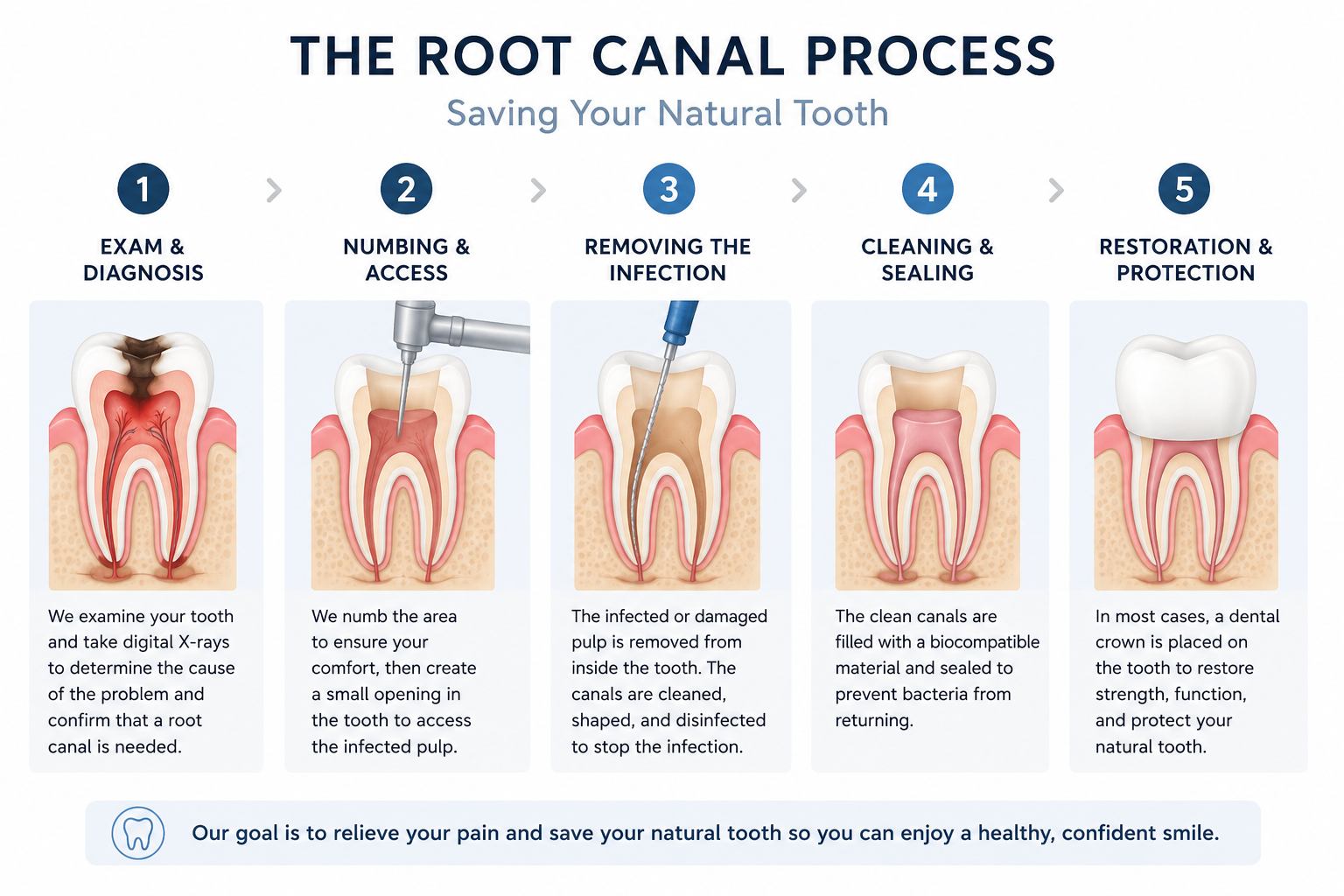
Root Canal Step-by-Step
- 1
Numb and Isolate the Tooth
The tooth and surrounding area are numbed, and a dental dam helps keep the treatment area clean and dry.
- 2
Access the Inside of the Tooth
A small opening is made to reach the infected or inflamed pulp.
- 3
Clean the Root Canals
The damaged pulp is removed, and the canals are carefully cleaned and disinfected.
- 4
Fill and Seal the Canals
The cleaned canals are filled with a biocompatible material called gutta-percha to help prevent bacteria from returning.
- 5
Restore the Tooth
The tooth is sealed with a temporary or permanent restoration based on your treatment plan. Many root-canal-treated teeth, particularly back teeth, benefit from a protective crown.
This process is sometimes referred to as pulpectomy (removing the pulp), cleaning and shaping (disinfecting and preparing the canals), and obturation (sealing the canals with gutta-percha). These are the clinical terms your dentist may use — the goal is simply to remove the source of infection and seal the tooth so it can continue to function.
Will I need a crown after my root canal?
Many teeth treated with root canals benefit from a dental crown. Because the tooth can become more brittle after the pulp is removed, a crown helps protect it from cracking and restores full strength and function. Whether a crown is needed depends on which tooth was treated and how much natural structure remains.
Why In-Office Matters
Most general dentists refer root canals out to an endodontist — which means a separate appointment, a new office, and more time out of your day. At Merchants Walk Dental, our experienced team handles root canal therapy right here in East Cobb, keeping your care in one convenient place for patients from Marietta, Roswell, Alpharetta, Woodstock, Kennesaw, Smyrna, and the surrounding area.
- No Referral Needed for Many Cases
For cases appropriate for treatment in our office, you can avoid an additional specialist appointment and receive your care here with the team you already know.
- Experienced Team
Dr. Bishara has performed root canal therapy extensively and will guide you through every step.
- Your Comfort First
We use local anesthesia and take our time to ensure you are completely at ease throughout the procedure.
Root Canal Recovery: What to Expect
What happens after the procedure?
Most patients can return to normal activities the same day or the following day, although mild tenderness may last for a few days.
- Mild tenderness is common for a few days.
- The permanent restoration (often a crown) protects the tooth.
- Good oral hygiene helps maintain long-term success.
Recovering from a root canal is typically a smooth and straightforward process. Managing your recovery properly helps ensure the tooth heals correctly and prevents damage to your temporary restoration.
What Can You Eat After a Root Canal?
While your tooth and gums are healing, stick to soft foods and avoid chewing directly on the treated side of your mouth. This protects the temporary filling from dislodging or cracking. Recommended options include:
- Mashed potatoes or sweet potatoes
- Yogurt, pudding, or applesauce
- Smoothies and protein shakes (avoid straws — suction can irritate the area)
- Scrambled eggs or tofu scrambles
- Oatmeal or cream of wheat (served lukewarm)
- Soups and broths (ensure they are not piping hot)
- Pasta, mac and cheese, or well-cooked rice
How Long Does the Soreness Last?
It is completely normal to experience mild soreness, tenderness, or a dull ache in the jaw for three to five days following the procedure. This discomfort is caused by localized inflammation in the surrounding periodontal ligament and tissue — not the nerve or pulp, which has been removed. Over-the-counter anti-inflammatory medications like ibuprofen manage this temporary tenderness well. If you experience severe, throbbing pain or swelling that worsens after a few days, contact our office immediately.
Can I Go to Work After a Root Canal?
Yes — most patients return to work or school the same day or the following morning. Because the procedure uses localized numbing rather than general sedation, your cognitive functions are completely unaffected. Numbness can last for several hours, so wait until normal sensation returns before chewing to avoid biting your cheek or tongue. If your job requires extensive speaking, or if you prefer not to return while the anesthesia wears off, consider scheduling your appointment for the late afternoon. We are also happy to provide an appointment note for your office or school.
Root Canal FAQs
Have Questions?
Root Canal FAQs
A Note on Referrals
If your case involves unusually complex anatomy, a previously treated tooth that requires retreatment, or another situation better suited to specialty care, we'll explain the referral and help you understand your options.
Root Canal Cost & Insurance
The cost depends on which tooth is being treated, whether additional restorative treatment such as a crown is needed, and your dental insurance benefits. We'll explain your treatment plan and estimated costs before beginning care — no surprises.
Ready to get started?
Call us or book online — we make it easy.