
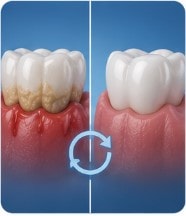
After a deep cleaning, consistent brushing, flossing, and keeping your follow-up appointments are the most important things you can do. Gum disease can return if bacteria are allowed to rebuild below the gumline — your home care routine is what prevents that from happening.
What You'll Learn
Why Home Care Is Critical After a Deep Cleaning
Scaling and root planing removes the bacterial deposits that caused your gum disease — but it does not eliminate the bacteria permanently. Plaque begins reforming on tooth surfaces within hours of any cleaning. If it is not removed consistently, it hardens into tartar and the disease process can restart.
The weeks immediately following a deep cleaning are especially important. Your gums are healing and reattaching to the cleaned root surfaces. Consistent home care during this period gives your body the best chance to reduce pocket depths and restore gum health.
Brushing After a Deep Cleaning
Continue brushing twice daily — morning and night — even if your gums are sore. Stopping brushing allows bacteria to accumulate rapidly. Use a soft-bristled toothbrush and gentle pressure. Aggressive scrubbing can irritate healing gum tissue and contribute to recession.
An electric toothbrush is an excellent choice after a deep cleaning. Studies consistently show that electric toothbrushes remove more plaque than manual brushing, particularly along the gumline where bacteria concentrate.
Brush for a full two minutes, paying particular attention to the gumline. Angle the bristles at 45 degrees toward the gum margin to clean just below it.
Flossing and Interdental Cleaning
Flossing is non-negotiable after a deep cleaning. The spaces between your teeth and the areas just below the gumline are exactly where gum disease bacteria live — and a toothbrush cannot reach them.
Floss once daily, ideally before bed. Curve the floss into a C-shape around each tooth and slide it gently below the gumline. If traditional floss is difficult to use, consider floss picks, interdental brushes, or a water flosser, which can flush bacteria from pockets and is gentle on healing tissue.
Your gums may bleed when you first resume flossing after treatment. This is normal and should improve within 1–2 weeks as the gums heal and inflammation decreases.
Your Follow-Up Schedule
After scaling and root planing, your dentist will schedule a re-evaluation appointment 4–6 weeks later. At this visit, your gum pockets will be re-measured to assess how well the treatment worked. This is not optional — it is a critical part of your care.
If your gum health has improved significantly, you will be placed on a periodontal maintenance schedule — typically cleanings every 3–4 months rather than the standard 6 months. This more frequent schedule is necessary because patients with a history of gum disease are at higher risk for recurrence.
Missing these maintenance appointments is one of the most common reasons gum disease returns.
Frequently Asked Questions
Questions About Your Gum Health?
Our team is here to help you maintain the results of your deep cleaning and keep your gums healthy long-term.