

How Does Technology Improve Diagnosis?
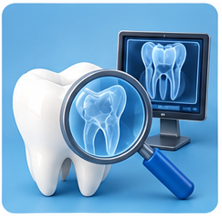
Digital X-rays, 3D cone beam CT imaging, intraoral cameras, and AI-assisted analysis tools allow dentists to detect problems earlier, see structures that are invisible to the naked eye, and make more confident diagnoses. Better diagnostic technology means catching decay, gum disease, and structural problems at earlier, more treatable stages.
What You'll Learn
Digital X-Rays: More Detail, Less Radiation
Digital X-rays produce high-resolution images instantly, with up to 90% less radiation than traditional film. Your dentist can zoom in, adjust contrast, and enhance specific areas of the image to identify decay, bone loss, and other problems that might be missed on a standard film. Digital images are stored electronically and can be compared side-by-side with previous X-rays to track changes over time — a powerful tool for monitoring slow-developing conditions like bone loss from gum disease.
3D Cone Beam CT Imaging
Cone beam CT (CBCT) technology produces a three-dimensional image of the teeth, jawbone, sinuses, and nerve pathways in a single scan. This level of detail is essential for implant planning — the dentist can measure bone volume and density, identify the exact location of nerves, and plan the implant placement virtually before touching the patient. CBCT is also used to evaluate impacted teeth, diagnose jaw joint problems, and plan complex root canal treatment on teeth with unusual anatomy.
Intraoral Cameras
Intraoral cameras capture high-definition images of the inside of your mouth that can be displayed on a chairside monitor in real time. They allow dentists to see areas that are difficult to visualize with the naked eye — the backs of molars, the gumline, and the surfaces between teeth. Cracks, early decay, worn restorations, and gum inflammation are all more visible with an intraoral camera than with a mirror and light alone. Patients can see the same images, which improves understanding and trust.
AI-Assisted Analysis
Artificial intelligence tools are increasingly used in dentistry to analyze X-rays and flag potential areas of concern for the dentist to review. These tools do not replace clinical judgment — they assist it, acting as a second set of eyes that can identify subtle patterns associated with early decay or bone loss. AI-assisted analysis is particularly valuable for detecting interproximal (between-tooth) decay that can be easy to miss on a busy X-ray. As these tools improve, they are becoming a standard part of the diagnostic workflow in modern dental practices.
Frequently Asked Questions
Accurate Diagnosis Starts Here
Schedule a comprehensive exam at Merchants Walk Dental and experience modern diagnostic care.