

Quick answer
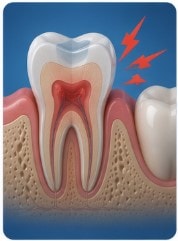
Persistent tooth pain, sensitivity, swelling, or a darkened tooth can point to an infection inside the tooth. Learn when an exam is the right next step.
What you'll learn
Pain that does not settle down
A lingering toothache, pain when chewing, or sensitivity that continues after hot or cold foods are gone can mean the pulp inside a tooth is inflamed or infected. Pain can come and go, so an evaluation is still important even if it briefly improves.
Visible changes around the tooth
Swelling, a pimple-like bump on the gums, tenderness, or a tooth that looks darker than nearby teeth can be signs of a deeper problem. These symptoms do not confirm a diagnosis on their own, but they are good reasons to schedule an exam.
What happens next
Your dentist will review your symptoms, examine the tooth, and may recommend X-rays to understand what is happening below the surface. When root canal treatment is appropriate, it removes infected tissue and helps preserve the natural tooth.