
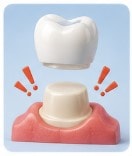
If your crown falls off, keep it safe and call your dentist as soon as possible — ideally the same day. The exposed tooth is vulnerable to sensitivity, damage, and decay. In most cases, the crown can be re-cemented if it is intact and the tooth underneath is healthy.
What You'll Learn
What to Do Immediately
If your crown comes off, stay calm — it is not a dental emergency in the same way a knocked-out tooth is, but it does need prompt attention. Find the crown and keep it safe. Rinse it gently with water and store it in a small container or zip-lock bag. Examine the crown — if it is intact (not cracked or broken), there is a good chance it can be re-cemented. Examine the tooth for visible decay, a broken tooth structure, or a post sticking up from the center. Call your dentist — most dental offices will see you the same day or next day for a crown that has come off. Protect the tooth in the meantime by avoiding chewing on that side.
Can You Re-Cement It at Home?
Temporary dental cement (such as Dentemp or Recapit) is available at most pharmacies and can be used to temporarily re-seat a crown until you can see your dentist. This is a short-term solution only — it is not a substitute for professional re-cementation.
If you use temporary cement: clean the inside of the crown and the tooth surface gently, apply a small amount of cement to the inside of the crown, seat it carefully and bite down gently to position it, and remove any excess cement from around the edges. Do not use super glue or household adhesives — they can damage the tooth and make professional re-cementation more difficult.
Temporary cement is not strong enough for long-term use. See your dentist as soon as possible.
Why the Tooth Is Vulnerable Without the Crown
A tooth that has been prepared for a crown has had significant structure removed. Without the crown in place, that tooth is highly sensitive to temperature, sweet foods, and pressure; vulnerable to fracture — the remaining tooth structure is thin and unsupported; at risk for decay — the exposed dentin is softer than enamel and more susceptible to bacteria; and at risk for shifting — adjacent and opposing teeth can begin to move into the space.
This is why it is important not to leave a crown off for an extended period. Even a few weeks without a crown can allow the tooth to shift or sustain damage that makes re-cementation impossible.
What Your Dentist Will Do
At your appointment, your dentist will examine the crown to determine if it is intact and can be re-used, examine the tooth for decay, fracture, or damage to the underlying structure, clean both the crown and the tooth preparation, and re-cement the crown with permanent dental cement if the crown and tooth are both in good condition.
If the crown is damaged or the tooth has decay or fracture, a new crown will need to be made. In some cases, if the tooth has fractured significantly or has extensive decay, additional treatment such as a buildup, post, or root canal may be needed before a new crown can be placed.
Frequently Asked Questions
Crown Fell Off? Call Us Today.
We see urgent crown situations promptly. Call us or schedule online and we will get you taken care of quickly.