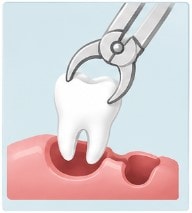

A wisdom tooth should be removed when it is impacted, causing recurrent infection, damaging neighboring teeth, developing decay, or causing significant pain. Not every wisdom tooth needs to come out — but those that are causing problems or are at high risk of doing so are best removed sooner rather than later.
What You'll Learn
Reasons a Wisdom Tooth Should Be Removed
Impaction
The tooth is blocked from fully erupting by bone, other teeth, or the angle of growth. Impacted wisdom teeth cannot be cleaned properly and are prone to infection, cysts, and damage to neighboring teeth.
Recurrent infection (pericoronitis)
If a partially erupted wisdom tooth has caused one or more infections, removal is typically recommended to prevent future episodes.
Decay
Wisdom teeth at the back of the mouth are difficult to clean. When significant decay develops, restoration is often impractical — extraction is the more reliable solution.
Damage to neighboring teeth
An impacted wisdom tooth pushing against the second molar can damage its root or cause decay on its back surface. Removal protects the neighboring tooth.
Cyst formation
A cyst around an impacted wisdom tooth can destroy bone and damage surrounding teeth. Removal of the tooth and the cyst is necessary to prevent further damage.
Crowding
In some cases, wisdom teeth contribute to crowding of the front teeth, particularly after orthodontic treatment. Your dentist or orthodontist can advise whether removal is appropriate.
When Can a Wisdom Tooth Be Left Alone?
Not every wisdom tooth needs to be removed. A wisdom tooth may be left in place if all of the following are true:
It has fully erupted into a healthy position
It is easy to clean with normal brushing and flossing
It is not causing pain, crowding, or damage to neighboring teeth
It has no signs of decay, infection, or cyst formation
It is being monitored with regular X-rays
What to Expect From the Procedure
Wisdom tooth extraction is one of the most common dental procedures. Here is what the process typically looks like:
Evaluation and X-rays
Your dentist will take X-rays to assess the position of the tooth, the shape of the roots, and the proximity to nerves. This determines whether the extraction can be done in-office or requires a referral to an oral surgeon.
Anesthesia
Local anesthesia is used to numb the area. Sedation options (nitrous oxide or oral sedation) are available if you are anxious. You should not feel pain during the procedure.
Extraction
The tooth is loosened and removed. For impacted teeth, a small incision in the gum may be needed. The procedure typically takes 20–45 minutes per tooth.
Recovery
Some swelling and soreness is normal for a few days. Most patients manage well with ibuprofen and recover fully within one to two weeks. Following post-operative instructions carefully reduces the risk of complications.
Frequently Asked Questions
Questions About Your Wisdom Teeth?
Not sure if your wisdom teeth need to come out? Call Merchants Walk Dental in Marietta for an evaluation. We will review your X-rays, assess your situation, and give you an honest recommendation — no pressure, just clear answers.
Related Services