

Quick Answer
A crown typically requires two appointments. At the first, your dentist numbs the tooth, reshapes it, takes an impression, and places a temporary crown. At the second visit 2–3 weeks later, the temporary is removed and the permanent crown is cemented in place.
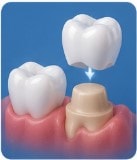
Appointment 1: Tooth Preparation
Numbing
The tooth and surrounding gum are numbed with local anesthesia. You will feel pressure but not pain during the procedure.
Tooth Reshaping
The outer layer of the tooth is reduced on all sides to create space for the crown. The amount removed depends on the crown material and the extent of damage or decay.
Impression
A digital scan or traditional impression is taken of the prepared tooth and surrounding teeth. This is sent to a dental lab to fabricate your custom crown.
Temporary Crown
A temporary crown is placed over the prepared tooth to protect it while your permanent crown is being made. It is held in place with temporary cement.
Appointment 2: Crown Placement
Removing the Temporary
The temporary crown is removed and the tooth is cleaned. Your dentist checks that the permanent crown fits correctly before cementing.
Fit and Color Check
The permanent crown is placed on the tooth to check the fit, margins, and color match. Adjustments can be made before final cementation.
Cementing
The crown is permanently cemented onto the prepared tooth. Excess cement is removed from around the margins.
Bite Adjustment
You bite down on special paper to check the bite. Minor adjustments are made until the crown feels natural and comfortable.
Caring for Your Crown
Frequently Asked Questions
Need a Crown? We Make It Easy.
Our team walks you through every step so there are no surprises. Most patients are comfortable throughout both appointments.