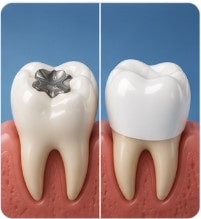
Whether your dentist recommends a filling or a crown depends on how much healthy tooth structure remains. Fillings repair small to moderate areas of decay or damage. Crowns are needed when a tooth is too damaged, cracked, or weakened for a filling to hold — they cap the entire visible tooth to restore its shape, strength, and function.
What You'll Learn
What Is a Dental Filling?
A filling is used to repair a tooth that has a cavity (decay) or minor damage. After removing the decayed or damaged portion of the tooth, your dentist fills the space with a restorative material — most commonly tooth-colored composite resin. Fillings are the most common dental restoration and are appropriate when the remaining tooth structure is strong enough to support the repair.
Modern composite (tooth-colored) fillings bond directly to the tooth and are virtually invisible. Amalgam (silver) fillings are still used in some cases and are known for their durability. Fillings typically take one appointment and last 7–15 years with proper care.
What Is a Dental Crown?
A crown (sometimes called a "cap") covers the entire visible portion of a tooth above the gumline. It is used when a tooth is too damaged, decayed, or weakened for a filling to provide adequate support. Crowns restore the tooth's shape, size, strength, and appearance.
Crowns are made from porcelain, ceramic, zirconia, metal, or a combination of materials. They typically require two appointments — one to prepare the tooth and place a temporary crown, and a second to cement the permanent crown. With proper care, crowns last 10–20 years or more.
How Does Your Dentist Decide?
The decision comes down to how much healthy tooth structure remains and whether a filling can reliably hold up under chewing forces. Here's how the two options compare across the most common factors:
| Factor | Filling | Crown |
|---|---|---|
| Amount of decay | Small to moderate | Large or extensive |
| Remaining tooth structure | Majority intact | Significantly compromised |
| Cracked or fractured tooth | Minor crack only | Significant crack or fracture |
| After root canal | Usually not needed | Almost always needed |
| Cusps involved | 1–2 cusps affected | 3+ cusps or entire biting surface |
| Tooth strength | Sufficient | Weakened — needs full coverage |
| Typical cost | $150–$400 per tooth | $1,000–$1,800 per tooth |
Signs You May Need a Crown Instead of a Filling
The cavity covers more than half the tooth's surface
A cusp (the pointed tip of a tooth) has broken off
The tooth has had a root canal — root canal-treated teeth become brittle and almost always need a crown
An existing large filling has cracked, failed, or the tooth around it has fractured
The tooth is cracked deeply enough that a filling won't hold the pieces together
Your dentist can see on an X-ray that the decay extends close to the nerve
Can a Filling Be Upgraded to a Crown Later?
Yes — and this is actually a common path. Many patients start with a filling when decay is caught early, then need a crown years later if the tooth weakens, the filling fails, or new decay develops around it.
It is generally better to place a crown proactively when the tooth is borderline rather than waiting for it to crack or break, which can make the situation more complex and expensive.
Frequently Asked Questions
Related Learning Center Articles
Root Canal vs. Extraction: Which Is Right for You?
Understand the key differences and how to decide which option is best.
Can a Cavity Heal Itself?
Learn the 5 stages of a cavity and when treatment becomes necessary.
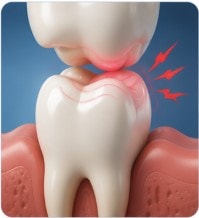
Why Does My Tooth Hurt When I Bite?
Pain when biting can signal a cavity, crack, infection, or bite problem.
What Is Considered a Dental Emergency?
Know which situations need same-day care and what to do while you wait.