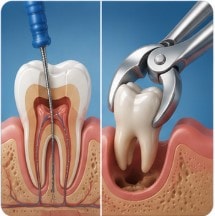
When a tooth is severely damaged or infected, your dentist may recommend either a root canal or an extraction. A root canal saves the tooth by removing the infected nerve and sealing it. An extraction removes the tooth entirely. In most cases, saving the tooth is the better long-term choice — but there are situations where extraction is the right answer. This article will help you understand the difference.
What You'll Learn
What Is a Root Canal?
A root canal (also called root canal therapy or endodontic treatment) is a procedure that removes the infected or inflamed pulp — the soft tissue inside the tooth containing nerves and blood vessels — cleans and shapes the root canals, and seals the tooth to prevent reinfection. A crown is usually placed afterward to protect and restore the tooth.
Root canals have a reputation for being painful, but with modern techniques and anesthesia, most patients report that the procedure feels no worse than getting a filling. The goal is to save your natural tooth and eliminate the infection causing your pain.
What Is a Tooth Extraction?
An extraction is the removal of the tooth from its socket in the jawbone. Simple extractions are performed on teeth that are visible above the gumline. Surgical extractions are needed for teeth that are broken below the gumline, impacted, or have curved roots.
After an extraction, the gap left behind can cause neighboring teeth to shift, bone loss in the jaw over time, and difficulty chewing. For these reasons, most dentists recommend replacing an extracted tooth with a dental implant, bridge, or partial denture.
Root Canal vs. Extraction — Side-by-Side Comparison
| Factor | Root Canal | Extraction |
|---|---|---|
| Saves the tooth? | Yes | No |
| Number of visits | 1–2 | 1 (simple) / 2+ (surgical) |
| Recovery time | 1–3 days | 3–7 days |
| Long-term cost | Lower (no replacement needed) | Higher (implant/bridge adds cost) |
| Bone preservation | Yes | No (bone loss over time) |
| Success rate | 85–97% | N/A — tooth is gone |
| Best for | Infected/damaged tooth with intact root | Tooth that cannot be saved |
When Is Extraction the Right Choice?
The tooth is cracked below the gumline and cannot be restored
Severe bone loss from advanced gum disease has left the tooth unstable
The tooth is so badly decayed that there is not enough structure remaining to support a crown
The tooth is impacted and causing damage to neighboring teeth
Cost is a significant barrier and the patient understands the long-term implications
When Is a Root Canal the Right Choice?
The tooth has a healthy root structure that can support a crown
The infection is contained within the tooth (not spread to surrounding bone)
The patient wants to preserve their natural tooth
The tooth is in a visible or functionally important position
Long-term cost savings are a priority
What About Cost?
A root canal + crown typically costs more upfront than a simple extraction. However, when you factor in the cost of replacing the extracted tooth (implant: $3,000–$5,000; bridge: $2,000–$4,000), saving the tooth with a root canal is almost always the more cost-effective long-term choice.
Most dental insurance plans cover a portion of both procedures. We recommend calling our office to discuss your specific coverage before making a decision.
Frequently Asked Questions
Related Learning Center Articles
Why Does My Tooth Hurt When I Bite?
Pain when biting can signal a cavity, crack, infection, or bite problem.
Can a Cavity Heal Itself?
Learn the 5 stages of a cavity and when treatment becomes necessary.
What Is Considered a Dental Emergency?
Know which situations need same-day care and what to do while you wait.
Invisalign vs. Braces: Which Is Right for You?
Compare clear aligners and traditional braces to find the right fit.