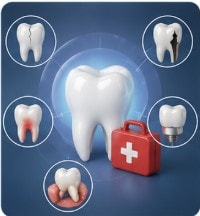
A dental emergency is any situation involving severe pain, infection, uncontrolled bleeding, a knocked-out tooth, or damage that cannot wait for a routine appointment. If you're unsure whether your situation is an emergency, the safest approach is to call your dentist — most offices can advise you over the phone and get you seen quickly when it matters.
What You'll Learn
True Dental Emergencies (Call Immediately)
These situations require same-day or urgent care. Do not wait for a routine appointment.
Knocked-out tooth (avulsed tooth)
Time is critical. If an adult tooth is knocked out, handle it by the crown (not the root), rinse gently, and try to reinsert it into the socket or keep it in milk. Call us immediately — reimplantation is most successful within 30–60 minutes.
Severe, unrelenting tooth pain
Pain that is throbbing, constant, or spreading to your jaw, ear, or neck may indicate an abscess or serious infection. Do not wait.
Dental abscess or facial swelling
A swollen jaw, cheek, or gum — especially with fever — is a sign of infection that can spread rapidly. Seek care the same day.
Broken tooth with sharp edges or exposed nerve
A fracture that exposes the inner tooth (dentin or pulp) causes intense pain and needs immediate attention.
Uncontrolled bleeding
Bleeding that does not stop after 10–15 minutes of firm pressure following a tooth extraction or injury needs to be evaluated.
Lost crown or filling with severe pain
If the exposed tooth is causing significant pain or sensitivity, it needs same-day attention.
Partially dislodged (extruded) tooth
A tooth that has been pushed out of position needs to be repositioned as soon as possible.
If you are experiencing any of the above, call our office immediately. We do our best to see emergency patients the same day.
Urgent Dental Issues (Should Be Seen Within 24–48 Hours)
These are not life-threatening emergencies but should not wait for a routine appointment:
A lost filling or crown with mild sensitivity (no severe pain)
A broken tooth with no pain or exposed nerve
Mild to moderate tooth pain that is manageable with over-the-counter pain relievers
A broken wire or bracket on braces causing irritation
Food or debris lodged between teeth causing discomfort
What to Do While You Wait
While you arrange to be seen, these first-aid steps can help manage your situation:
- 1
For a knocked-out tooth:
Keep it moist (in milk, saline, or between your cheek and gum). Do not scrub the root. Call us immediately.
- 2
For severe pain:
Take ibuprofen (if not contraindicated) and avoid hot or cold foods. Do not place aspirin directly on the gum — it can cause a chemical burn.
- 3
For swelling:
Apply a cold compress to the outside of your cheek in 20-minute intervals. Do not apply heat.
- 4
For a lost crown:
If you still have the crown, you can temporarily re-cement it with dental cement from a pharmacy. Avoid chewing on that side.
- 5
For bleeding:
Apply firm, steady pressure with a clean gauze or cloth for 10–15 minutes without lifting to check. If bleeding continues, call us or go to urgent care.
Is It an Emergency? Quick Reference
No pain, routine issue, cosmetic concern only. Schedule a regular appointment.
Mild pain, lost restoration, minor chip. Call us to get scheduled quickly.
Severe pain, swelling, knocked-out tooth, uncontrolled bleeding. Call us immediately.
Frequently Asked Questions
Related Learning Center Articles
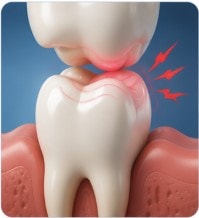
Why Does My Tooth Hurt When I Bite?
Pain when biting can signal a cavity, crack, infection, or bite problem.
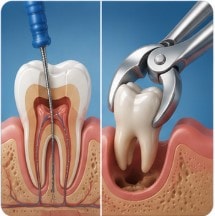
Root Canal vs. Extraction: Which Is Right for You?
Understand the key differences and how to decide which option is best.
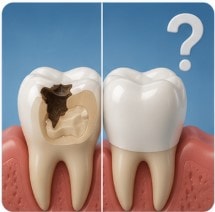
Can a Cavity Heal Itself?
Learn the 5 stages of a cavity and when treatment becomes necessary.
Invisalign vs. Braces: Which Is Right for You?
Compare clear aligners and traditional braces to find the right fit.