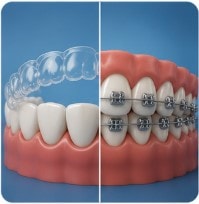
Both Invisalign and traditional braces straighten teeth effectively — the right choice depends on your specific case, lifestyle, and preferences. Invisalign uses a series of clear, removable aligners that are nearly invisible. Braces use metal brackets and wires bonded to the teeth. For most mild to moderate cases, either option works well. Your dentist can help you decide which is the better fit.
What You'll Learn
How Does Invisalign Work?
Invisalign uses a series of custom-made, clear plastic aligners that fit snugly over your teeth. Each set of aligners is worn for 1–2 weeks before moving to the next set in the series. Each new set applies gentle pressure to gradually shift your teeth into the desired position. Treatment typically takes 6–18 months depending on the complexity of your case.
Because the aligners are removable, you take them out to eat, drink (anything other than water), brush, and floss. You must wear them for at least 20–22 hours per day for treatment to stay on track.
How Do Traditional Braces Work?
Traditional braces consist of metal (or ceramic) brackets bonded to the front of each tooth, connected by a wire that is periodically tightened by your orthodontist or dentist. The wire applies continuous pressure to move teeth over time. Treatment typically takes 18–36 months.
Braces are fixed — they cannot be removed at home. This makes them more effective for complex cases because the force is constant and does not depend on patient compliance.
Invisalign vs. Braces — Side-by-Side Comparison
| Factor | Invisalign | Traditional Braces |
|---|---|---|
| Visibility | Nearly invisible | Noticeable metal brackets |
| Removable? | Yes | No |
| Eating restrictions | None (remove to eat) | Many (no hard/sticky foods) |
| Oral hygiene | Easier (remove to brush/floss) | More difficult |
| Treatment time | 6–18 months (typical) | 18–36 months |
| Best for | Mild to moderate cases | Mild to severe/complex cases |
| Cost | $3,000–$6,000 | $2,500–$5,500 |
| Office visits | Every 6–8 weeks | Every 4–6 weeks |
| Compliance required | High (must wear 20–22 hrs/day) | Low (fixed to teeth) |
Who Is a Good Candidate for Invisalign?
Adults and older teens who can commit to wearing aligners consistently
Patients with mild to moderate crowding, spacing, or bite issues
Patients who want a discreet treatment option
Patients with active lifestyles (sports, playing instruments)
Patients who prioritize easy oral hygiene during treatment
Who Might Be Better Suited for Braces?
Patients with severe crowding, significant bite problems, or complex tooth movements
Younger children and teens who may not reliably wear removable aligners
Patients who prefer a "set it and forget it" approach (no compliance required)
Cases requiring precise rotation or vertical tooth movement
Patients where cost is the primary factor (braces are often slightly less expensive)
What About Cost and Insurance?
Invisalign and braces are often similarly priced, though Invisalign can cost slightly more in some cases. Many dental insurance plans that include orthodontic coverage will cover both options equally — the benefit is typically a lifetime maximum (often $1,000–$2,000) that applies regardless of which treatment you choose. We offer flexible payment options and can help you understand your coverage before starting treatment.
Frequently Asked Questions
Related Learning Center Articles
Root Canal vs. Extraction: Which Is Right for You?
Understand the key differences and how to decide which option is best.
Can a Cavity Heal Itself?
Learn the 5 stages of a cavity and when treatment becomes necessary.
What Is Considered a Dental Emergency?
Know which situations need same-day care and what to do while you wait.
Why Does My Tooth Hurt When I Bite?
Pain when biting can signal a cavity, crack, infection, or bite problem.