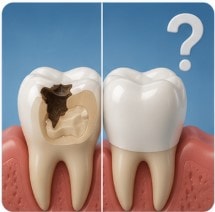
The short answer: it depends on the stage. In the very earliest stage — before a hole forms in the enamel — a cavity can be reversed with fluoride and improved oral hygiene. Once a cavity has broken through the enamel and formed an actual hole, it cannot heal on its own and requires a filling. The longer you wait, the larger and more expensive the repair.
What You'll Learn
How Does a Cavity Form?
A cavity (dental caries) forms through a four-step process:
Plaque builds up
Bacteria in your mouth feed on sugars and starches, producing acids.
Acid attacks enamel
The acid dissolves minerals from the tooth's outer layer (enamel) in a process called demineralization.
White spot lesion
The first visible sign of a cavity is a chalky white spot on the enamel. At this stage, no hole has formed yet.
Enamel breaks down
If demineralization continues, the enamel weakens and eventually collapses, forming a cavity (hole).
The 5 Stages of a Cavity
Demineralization
ReversibleMinerals lost from enamel surface. No hole yet. Reversible with fluoride.
Enamel Decay
Filling neededEnamel begins to break down. A small hole may form. Requires a filling.
Dentin Decay
Larger restorationDecay reaches the softer layer beneath enamel. Sensitivity increases. Filling or larger restoration needed.
Pulp Involvement
Root canal likelyDecay reaches the nerve. Pain, sensitivity, possible abscess. Root canal likely needed.
Abscess
UrgentInfection spreads to surrounding tissue and bone. Root canal or extraction required. Urgent treatment needed.
Can Early Cavities Be Reversed?
Yes — but only at Stage 1 (demineralization), before a hole has formed. This is called remineralization. The tooth can rebuild lost minerals through:
Fluoride toothpaste and fluoride treatments at your dental cleaning
Reducing sugar and acid intake
Improved brushing and flossing habits
Drinking fluoridated water
Prescription fluoride products (for high-risk patients)
Important: Once a hole forms in the enamel (Stage 2 or beyond), the tooth cannot repair itself. The cavity will only grow larger over time.
Signs You May Have a Cavity
Tooth sensitivity to hot, cold, or sweet foods
A visible hole, pit, or dark spot on the tooth
Pain when biting or chewing
A toothache that comes and goes
No symptoms at all (many cavities are painless until they're large)
Why Waiting Makes It Worse
A small cavity that requires a simple filling today can become a large cavity requiring a crown, a root canal, or even an extraction if left untreated. Treatment costs increase significantly at each stage.
| Treatment | Estimated Cost |
|---|---|
| Filling | $150 – $300 |
| Crown | $1,000 – $1,800 |
| Root canal | $800 – $1,500 (plus crown) |
Catching cavities early — at your regular cleaning and exam — is the most cost-effective approach.
Frequently Asked Questions
Related Learning Center Articles
Root Canal vs. Extraction: Which Is Right for You?
Understand the key differences and how to decide which option is best.
Why Does My Tooth Hurt When I Bite?
Pain when biting can signal a cavity, crack, infection, or bite problem.
What Is Considered a Dental Emergency?
Know which situations need same-day care and what to do while you wait.
Invisalign vs. Braces: Which Is Right for You?
Compare clear aligners and traditional braces to find the right fit.