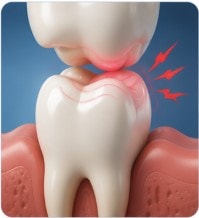
A tooth that hurts when you bite may be caused by a cracked tooth, cavity, infection, loose filling, or bite imbalance. While some causes are minor, others require prompt dental treatment to prevent further damage. The only way to know for sure is an exam — but this article will help you understand what might be going on.
What You'll Learn
Why Does a Tooth Hurt When Biting?
Pain when biting can occur for several reasons, from minor issues to more serious problems. Your teeth are designed to handle significant chewing forces — but when something is wrong with the tooth structure, the nerve, or the surrounding tissues, that pressure becomes painful.
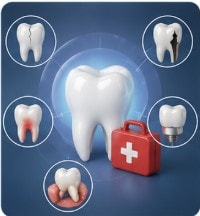
The most common causes include cracked teeth, deep cavities, infections, worn teeth, loose or broken fillings, and bite problems. Identifying the cause is the first step to getting relief and protecting your oral health.
Learn more about each cause below.
Common Causes of Tooth Pain When Biting
Cracked Tooth
A crack in the tooth — even a hairline fracture — can cause sharp pain when biting. The crack flexes under pressure, irritating the nerve. You may notice the pain is worse when you release your bite, not just when you press down. Cracked teeth don't show up on X-rays and require a clinical exam to diagnose.
Deep Cavity
When decay reaches the inner layers of the tooth (dentin or pulp), the nerve becomes sensitive to pressure. A cavity that's been left untreated long enough will eventually cause pain with biting, not just with hot or cold foods.
Tooth Infection (Abscess)
An infection at the root of the tooth creates pressure in the surrounding bone and tissue. This can make the tooth feel tender or painful when you bite down — and may be accompanied by swelling, a bad taste, or a pimple-like bump on the gum. Infections require prompt treatment.
Loose or Broken Filling
A filling that has cracked, loosened, or fallen out leaves the tooth vulnerable. The exposed tooth structure can be sensitive to pressure, and food can get trapped in the gap, causing discomfort.
Bite Imbalance (High Bite)
After a filling, crown, or other dental work, the tooth may sit slightly higher than the surrounding teeth. This causes it to absorb more force than it should with every bite. The result is a sore, achy tooth — usually one that feels better after a few days or after a simple bite adjustment.
Gum Disease or Gum Recession
When gum tissue recedes or becomes inflamed, the root surface of the tooth can become exposed. Root surfaces are more sensitive than enamel and can be painful under pressure.
When Should You See a Dentist?
Monitor symptoms and practice good oral hygiene. Schedule a routine appointment soon.
Schedule an appointment with your dentist as soon as possible. Don't wait it out.
Call our office immediately or seek urgent care. This may be a dental infection.
Never ignore tooth pain with swelling, fever, or spreading pain to your jaw or ear. These are signs of a dental infection that can become serious if left untreated.
How Is It Treated?
Treatment depends entirely on the cause. Here's a general guide — but only an exam and X-rays can confirm what's actually going on with your tooth.
| Problem | Possible Treatment |
|---|---|
| Small cavity | Filling |
| Large cavity | Crown |
| Cracked tooth | Crown (or root canal if nerve is involved) |
| Infection / abscess | Root Canal Therapy |
| Loose or broken filling | New filling or crown |
| Bite imbalance | Bite adjustment |
| Severe damage | Extraction + replacement options |
Frequently Asked Questions
Related Learning Center Articles
What Is Considered a Dental Emergency?
Know which situations need same-day care and what to do while you wait.
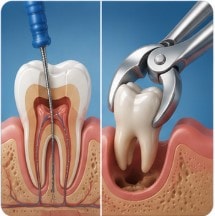
Root Canal vs. Extraction: Which Is Right for You?
Understand the key differences and how to decide which option is best.
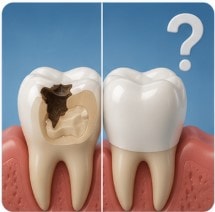
Can a Cavity Heal Itself?
Learn the 5 stages of a cavity and when treatment becomes necessary.
Invisalign vs. Braces: Which Is Right for You?
Compare clear aligners and traditional braces to find the right fit.