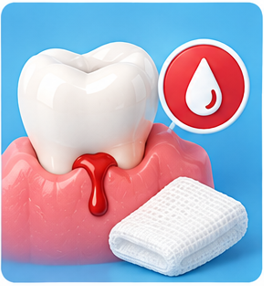
Apply firm, sustained pressure with clean gauze for 20–30 minutes without checking. Avoid rinsing, spitting, or using a straw. If active bleeding has not slowed after 30–60 minutes of firm pressure, call your dentist. If you are losing a significant amount of blood or feel faint, go to the emergency room.
What To Do Right Away
Apply firm, sustained pressure
Fold a piece of clean gauze into a thick pad and bite down firmly on it. Hold steady pressure for 20–30 minutes without checking or removing the gauze. Consistent pressure is key — lifting the gauze repeatedly disrupts clot formation.
Use a moistened tea bag
If gauze is not available, a moistened black tea bag works well. The tannic acid in black tea helps promote clotting. Bite down firmly for 20–30 minutes.
Avoid rinsing or spitting
Do not rinse, spit, or use a straw. These actions create suction that can dislodge the forming blood clot and restart bleeding.
Keep your head elevated
Sit upright or keep your head elevated — lying flat increases blood pressure in the area and can worsen bleeding.
Call your dentist if bleeding continues
If active bleeding has not slowed after 30–60 minutes of firm pressure, call your dentist. Do not wait and hope it resolves on its own.
What NOT To Do
Rinse vigorously or spit — this dislodges the forming clot
Use a straw — the suction restarts bleeding
Smoke — nicotine impairs clotting and healing
Touch the area with your tongue or fingers
Eat hot foods or drink alcohol
Exercise or do strenuous activity
Go to the ER If You Have These Signs
Active bleeding has not slowed after 60 minutes of firm pressure
You are losing a significant amount of blood
You feel faint, dizzy, or weak
The bleeding is from a serious injury to the mouth or jaw
Frequently Asked Questions
Tooth Won't Stop Bleeding? Call Us.
Persistent dental bleeding needs professional attention. Call Merchants Walk Dental in Marietta for guidance and same-day care when needed.