Can Cavities Spread to Other Teeth?
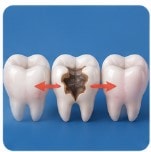
Cavities do not spread like a contagious infection, but the bacteria that cause them — primarily Streptococcus mutans — can transfer between teeth and between people. Untreated decay also creates an acidic environment in the mouth that accelerates decay in neighboring teeth.
What You'll Learn
How Do Cavities "Spread"?
Cavities themselves do not jump from tooth to tooth. But the bacteria responsible — primarily Streptococcus mutans — can spread through saliva, shared utensils, and even kissing. Once established in the mouth, these bacteria colonize multiple teeth simultaneously.
Bacteria spread through saliva
Sharing food, drinks, or utensils transfers cavity-causing bacteria between people. Parents can unknowingly pass bacteria to infants this way.
An untreated cavity creates an acidic environment
Decay produces acid that lowers the pH of the entire mouth, making neighboring teeth more vulnerable to demineralization.
Bacteria migrate along the gumline
Bacteria in plaque can travel along the gumline and establish new colonies on adjacent teeth, especially if oral hygiene is inconsistent.
A cavity between two teeth affects both
Interproximal cavities (between teeth) often affect both contact surfaces simultaneously, which is why flossing is essential for prevention.
Which Teeth Are Most at Risk?
Teeth adjacent to an untreated cavity are at elevated risk because they share the same acidic oral environment and bacterial load. Back molars are most vulnerable overall due to their deep grooves and harder-to-clean surfaces. Teeth with existing restorations can also develop new decay at the margins if bacteria accumulate there.
Frequently Asked Questions
Concerned About Cavities?
Early treatment stops decay before it spreads. Schedule a checkup and we will catch any problems while they are still small.