

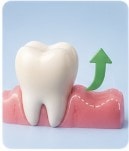
No — receding gums do not grow back on their own. Once gum tissue is lost, it cannot regenerate without treatment. However, a gum graft procedure can restore lost tissue and protect the exposed root. The most important step is identifying and treating the underlying cause to prevent further recession.
Treatment Options for Gum Recession
Deep Cleaning (Scaling and Root Planing)
When recession is caused by gum disease, a deep cleaning removes bacteria and tartar from below the gumline. This stops the disease process and allows the gums to stabilize, though it does not restore lost tissue.
Gum Graft Surgery
For significant recession — especially when the root is exposed — a gum graft uses tissue from the roof of the mouth or a donor source to cover the root and restore the gumline. This protects the tooth from sensitivity and decay and prevents further recession at the treated site.
Night Guard for Grinding
If teeth grinding is contributing to recession, a custom night guard reduces the force on teeth and gums during sleep, helping to prevent further damage.
How to Prevent Further Recession
- Use a soft-bristled toothbrush and gentle circular brushing technique
- Treat any underlying gum disease with professional care
- Wear a night guard if you grind or clench your teeth
- Quit smoking or using tobacco products
- Keep up with regular dental cleanings and exams
Frequently Asked Questions
Concerned About Gum Recession?
Our team can evaluate the extent of recession and recommend the right treatment — whether that means a deep cleaning, monitoring, or a referral for a gum graft.