
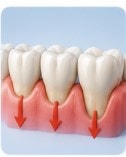
Gum recession happens when gum tissue pulls back from the tooth, exposing the root. The most common causes are gum disease, aggressive brushing, teeth grinding, and genetics. Once gums recede, they do not grow back on their own — but treatment can stop further progression and, in some cases, restore lost tissue.
Common Causes of Gum Recession
Gum Disease (Periodontitis)
The most common cause. Bacterial infection destroys the gum tissue and bone that support teeth, causing the gums to pull away from the tooth surface.
Aggressive Brushing
Brushing too hard or using a hard-bristled toothbrush wears away gum tissue over time. This is especially common along the outer surfaces of the upper and lower front teeth.
Teeth Grinding (Bruxism)
Grinding or clenching puts excessive force on the teeth and supporting structures, which can contribute to gum recession over time.
Genetics
Some people have naturally thin or fragile gum tissue that is more susceptible to recession, even with good oral hygiene habits.
Tobacco Use
Smoking and smokeless tobacco reduce blood flow to the gums and increase the risk of gum disease, both of which contribute to recession.
Signs Your Gums May Be Receding
- Teeth appear longer than they used to
- Increased sensitivity to cold, heat, or sweet foods
- A visible notch or line near the gumline
- Roots of teeth are visible
- Gums look uneven or pulled back on certain teeth
How Gum Recession Is Treated
Treatment depends on the cause and severity. Mild recession caused by gum disease is often stabilized with a deep cleaning (scaling and root planing) combined with improved home care. This removes the bacteria driving the disease and allows the gums to heal.
For more significant recession — especially when the root is exposed — a gum graft may be recommended. This procedure uses tissue from the roof of the mouth or a donor source to cover the exposed root and restore a healthy gumline. Addressing the underlying cause (gum disease, grinding, brushing technique) is essential to prevent further recession after treatment.
Frequently Asked Questions
Noticing Changes in Your Gumline?
Early evaluation can determine the cause and help prevent further recession. Our team can assess your gum health and recommend the right treatment plan.