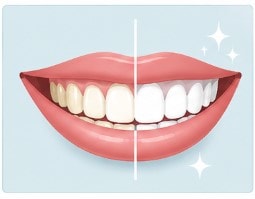
Can Whitening Cause Sensitivity?
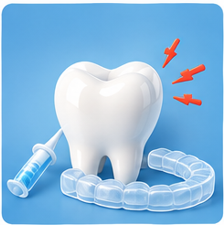
Yes — whitening can cause temporary sensitivity. Peroxide in whitening products penetrates enamel and temporarily irritates the nerve. This usually resolves within 24 to 72 hours after treatment. It does not cause permanent damage.
What You'll Learn
Why Does Whitening Cause Sensitivity?
Whitening products use hydrogen peroxide or carbamide peroxide to break down stain molecules. These peroxides can temporarily penetrate the enamel and reach the dentin, stimulating the nerve and causing sensitivity.
Higher peroxide concentrations cause more sensitivity
In-office treatments use higher concentrations than take-home kits, which is why they tend to cause more sensitivity.
Longer treatment times increase the effect
The longer peroxide contacts the tooth, the more likely it is to reach the dentin and cause temporary irritation.
Pre-existing enamel erosion or gum recession worsens it
If your dentin is already partially exposed, whitening is more likely to cause sensitivity.
Sensitivity is usually worst during and immediately after treatment
Most patients notice sensitivity peaks during the whitening session and for a few hours afterward, then fades within 24 to 72 hours.
How to Minimize Whitening Sensitivity
Use a desensitizing toothpaste for two weeks before whitening. Take breaks between whitening sessions. Avoid very hot or cold foods for 24 hours after treatment. Your dentist can also apply a fluoride varnish before or after whitening to reduce sensitivity.
Frequently Asked Questions
Interested in Whitening?
We offer professional whitening with sensitivity management built in. Ask us about your options.