

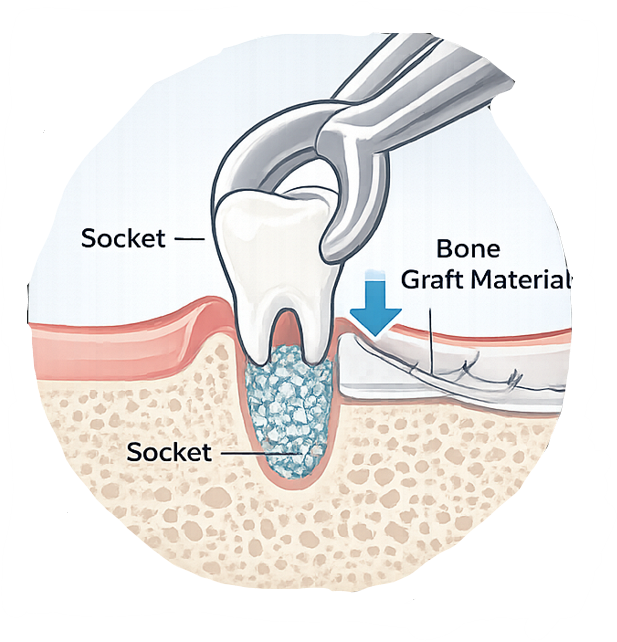
A dental bone graft is a procedure that places bone graft material into an extraction socket (or an area of bone loss) to preserve the jawbone and prevent it from shrinking. It is most commonly performed at the time of tooth extraction to prepare the site for a future dental implant. The graft material is gradually replaced by the patient's own bone over 3–6 months.
Why Is a Bone Graft Needed?
When a tooth is removed, the jawbone that surrounded the tooth root begins to resorb (shrink) within weeks. Without intervention, significant bone volume can be lost within the first year. This bone loss can make it difficult or impossible to place a dental implant later — and can affect the appearance of the face and adjacent teeth. A socket preservation bone graft placed at the time of extraction prevents this bone loss and keeps the site ready for an implant.
What Happens During the Procedure?
A bone graft is typically performed at the same appointment as the tooth extraction. After the tooth is removed, the dentist cleans the socket and fills it with bone graft material — which may be derived from human donor bone (allograft), animal bone (xenograft), synthetic material, or the patient's own bone. The socket is then covered with a membrane and sutured closed. The graft material acts as a scaffold that the body gradually replaces with new bone over 3–6 months.
Frequently Asked Questions
Questions About Bone Grafting?
We can explain whether a bone graft is right for your situation and walk you through what the procedure involves.