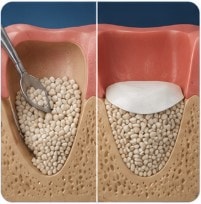
A dental bone graft adds bone material to an area of the jaw that has lost volume or density — most often after a tooth extraction or due to gum disease. It is commonly performed to prepare the jaw for a dental implant. The graft material acts as a scaffold that your body gradually replaces with its own bone over several months.
What You'll Learn
Why Does Jawbone Loss Happen?
When a tooth is lost or extracted, the jawbone that once supported it begins to resorb (shrink) because it no longer receives the stimulation it needs. This process begins within weeks of tooth loss and continues over time. Significant bone loss can occur within the first year. Gum disease (periodontitis) can also destroy the bone around teeth while they are still in place.
Bone loss matters because:
It can make dental implants impossible without grafting first
It can cause neighboring teeth to shift or become unstable
It changes the shape of the face over time, causing a "sunken" appearance
It can make dentures fit poorly as the ridge changes shape
What Is a Dental Bone Graft?
A bone graft is a surgical procedure that places bone material into an area of the jaw to restore its volume and density. The graft material can come from:
Your own bone (autograft)
Taken from another area of your mouth or body; considered the gold standard but requires a second surgical site.
Donor bone (allograft)
Processed human bone from a tissue bank; the most common type used in dentistry.
Animal-derived bone (xenograft)
Typically bovine (cow) bone that has been processed to remove all organic material; widely used and well-tolerated.
Synthetic bone (alloplast)
Lab-made materials that mimic natural bone; no donor source required.
The graft material acts as a scaffold. Over time, your body's own bone cells migrate into the graft and replace it with natural bone — a process called remodeling.
When Is a Bone Graft Needed?
Before a dental implant
If the jaw lacks sufficient volume or density to anchor the implant post.
At the time of tooth extraction (socket preservation)
Placing graft material immediately after extraction prevents bone loss and preserves the site for a future implant.
To treat bone loss from gum disease
Grafting can help restore bone destroyed by periodontitis.
Before dentures
To build up a ridge that has resorbed and no longer supports a well-fitting denture.
What to Expect During and After a Bone Graft
The procedure
Performed under local anesthesia (sedation available). The area is numbed, a small incision is made in the gum, the graft material is placed, and the site is sutured closed. Most procedures take 45–90 minutes.
Immediately after
Expect swelling, bruising, and mild to moderate soreness for 3–5 days. You will be given post-operative instructions and may be prescribed antibiotics and pain medication.
The first two weeks
Eat soft foods, avoid the surgical site when brushing, and do not smoke. Follow all post-op instructions carefully — this period is critical for healing.
Healing and remodeling
The graft material integrates with your existing bone over 3–6 months. Your dentist will monitor healing with X-rays. Once healing is confirmed, implant placement can proceed.
Does a Bone Graft Hurt?
The procedure itself is done under anesthesia and should not be painful. Post-operative discomfort is typically manageable with over-the-counter pain relievers, though your dentist may prescribe something stronger depending on the extent of the graft. Most patients return to normal activities within a few days.
Frequently Asked Questions
Related Learning Center Articles
The Step-By-Step Dental Implant Process
A complete guide to what happens at each stage of implant treatment.
Root Canal vs. Extraction: Which Is Right for You?
Understand the key differences and how to decide which option is best.
What Is Considered a Dental Emergency?
Know which situations need same-day care and what to do while you wait.
Crown vs. Filling: How Does Your Dentist Decide?
Learn when a filling is enough and when a crown is necessary.