A dental implant replaces a missing tooth with a titanium post that fuses to the jawbone, topped with a custom crown that looks and functions like a natural tooth. The process typically takes 3–6 months from start to finish and involves several appointments. While it requires more time than other tooth replacement options, implants are the most durable and natural-feeling solution available.
What You'll Learn
What Is a Dental Implant?
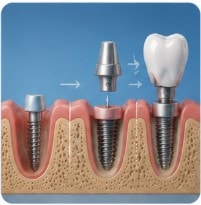
A dental implant is a small titanium post that is surgically placed into the jawbone to serve as an artificial tooth root. Over several months, the post fuses with the surrounding bone through a process called osseointegration — creating a stable, permanent foundation. An abutment (connector piece) is then attached to the post, and a custom-made crown is placed on top to complete the restoration.
The result is a tooth replacement that looks, feels, and functions like a natural tooth — and with proper care, can last a lifetime.
The Implant Process — Step by Step
Step 1 — Consultation & Treatment Planning
Your dentist evaluates your oral health, takes X-rays or a 3D cone beam CT scan, and reviews your medical history. This step determines whether you have enough bone density to support an implant, whether any preparatory procedures (such as a bone graft or tooth extraction) are needed, and what the full treatment plan will look like.
Step 2 — Tooth Extraction (If Needed)
If the tooth being replaced is still present, it must be extracted before or at the time of implant placement. In some cases, an implant can be placed immediately after extraction ("immediate placement"), though this depends on the condition of the bone and surrounding tissue.
Step 3 — Bone Grafting (If Needed)
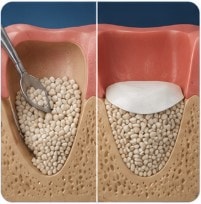
If the jawbone is too thin or soft to support an implant, a bone graft is performed first. Bone grafting adds volume and density to the jaw so it can anchor the implant securely. Healing from a bone graft typically takes 3–6 months before implant placement can proceed.
Step 4 — Implant Placement Surgery
The titanium post is surgically placed into the jawbone under local anesthesia (sedation is also available). The gum is sutured closed over or around the implant. Most patients experience mild soreness and swelling for a few days, manageable with over-the-counter pain relievers.
Step 5 — Osseointegration (Healing Period)
Over the next 3–6 months, the implant fuses with the jawbone. This is the most time-consuming part of the process, but it is what makes implants so stable and long-lasting. You will have a temporary restoration during this period.
Step 6 — Abutment Placement
Once osseointegration is complete, a small connector piece called an abutment is attached to the implant post. In some cases, the abutment is placed at the same time as the implant. The gum tissue is allowed to heal around the abutment for a few weeks.
Step 7 — Crown Placement
Impressions (or digital scans) of your mouth are taken to fabricate your custom crown. The crown is matched to the color, shape, and size of your surrounding teeth. Once ready, it is attached to the abutment — completing your new tooth.
How Long Does the Whole Process Take?
| Phase | Estimated Duration |
|---|---|
| Consultation & planning | 1–2 weeks |
| Bone graft healing (if needed) | 3–6 months |
| Implant placement to osseointegration | 3–6 months |
| Abutment & crown | 2–4 weeks |
| Total (without bone graft) | 4–8 months |
| Total (with bone graft) | 9–14 months |
Are You a Good Candidate for Implants?
Good candidates:
Adults with fully developed jawbones (typically 18+)
Patients with adequate bone density (or willing to undergo grafting)
Non-smokers or patients willing to quit during healing
Patients with good overall health and controlled chronic conditions
Patients committed to good oral hygiene and regular dental visits
May not be candidates without additional evaluation:
Heavy smokers (smoking significantly impairs healing)
Patients with uncontrolled diabetes
Patients who have had radiation therapy to the jaw
Patients with certain bone conditions or on bisphosphonate medications
How Much Do Implants Cost?
A single dental implant typically costs $3,000–$5,000 at our office, which includes the implant post, abutment, and crown. Additional procedures such as bone grafting or extractions are priced separately.
Most dental insurance plans do not cover implants, though some plans offer partial coverage. We offer flexible financing options to make implants accessible.
Questions about cost or financing? Call us at (770) 691-5051 — we're happy to walk you through your options.
Frequently Asked Questions
Related Learning Center Articles
Bone Grafting Explained
Learn what bone grafting is, why it's needed, and what to expect.
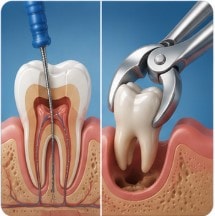
Root Canal vs. Extraction: Which Is Right for You?
Understand the key differences and how to decide which option is best.
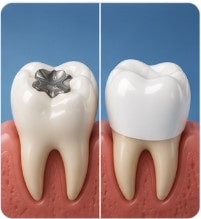
Crown vs. Filling: How Does Your Dentist Decide?
Learn when a filling is enough and when a crown is necessary.
What Is Considered a Dental Emergency?
Know which situations need same-day care and what to do while you wait.