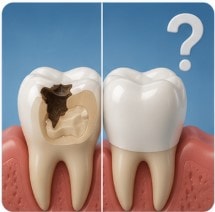
The crown itself cannot get a cavity — the porcelain or metal material is not susceptible to decay. However, the natural tooth structure underneath the crown absolutely can. Decay most commonly develops at the margin where the crown meets the tooth at the gumline. If bacteria and plaque accumulate there, the tooth underneath can decay — which is why brushing, flossing, and regular checkups remain essential even after a crown is placed.
What You'll Learn
Why the Tooth Under a Crown Is Still Vulnerable
A dental crown covers the visible portion of a tooth above the gumline, but it does not seal the tooth off from the oral environment completely. The margin — the edge where the crown meets the tooth — is the most vulnerable area.
Over time, the cement that seals the crown can wash out slightly, the gumline can recede, or the margin can develop a microscopic gap. Any of these changes creates an entry point for bacteria. Once bacteria reach the tooth structure beneath the crown, decay can develop just as it would on an uncrowned tooth.
Where Decay Most Commonly Develops
The most common location for decay under a crown is at the gumline — the cervical margin. This area is difficult to clean thoroughly with a toothbrush alone, and it is the point where the crown transitions to natural tooth structure.
Decay can also develop if the crown was placed over a tooth that already had a small amount of decay that was not fully removed, or if the crown cement fails and bacteria infiltrate the space between the crown and the tooth.
Warning Signs of Decay Under a Crown
Decay under a crown does not always cause obvious symptoms, especially in the early stages. This is one reason why regular X-rays and checkups are important even for crowned teeth — your dentist can detect decay before it becomes symptomatic.
Symptoms that may indicate a problem include sensitivity to hot, cold, or sweets around a crowned tooth, pain when biting or chewing, a bad taste or odor near the crown, visible darkening at the gumline, or a crown that feels loose or moves slightly.
How to Protect a Crowned Tooth
Brush the gumline carefully
Use a soft-bristled toothbrush and angle the bristles toward the gumline to clean the margin of the crown. This is where plaque accumulates and where decay begins.
Floss daily — even around crowns
Flossing removes plaque from between teeth and at the gumline. Use a gentle C-shape motion around the crown margin. Water flossers can also be helpful for cleaning around crowns.
Keep your regular checkups
Your dentist checks the margins of all your crowns at every exam and takes X-rays periodically to look for decay that is not visible. Early detection means simpler treatment.
Address dry mouth if you have it
Saliva neutralizes acids and washes away bacteria. Dry mouth — often caused by medications — significantly increases cavity risk, including under crowns. Talk to your dentist if you experience dry mouth.
Frequently Asked Questions
Related Articles
What Are Dental Crowns Made Of?
A breakdown of crown materials — zirconia, ceramic, gold, and more.
Crown vs. Filling: How Does Your Dentist Decide?
The key factors that determine whether you need a filling or a crown.
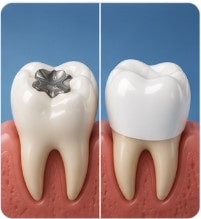
What Happens If I Wait Too Long to Get a Crown?
Delaying a recommended crown can lead to more serious — and costly — problems.
Can a Cavity Heal Itself?
The truth about remineralization and when a cavity needs treatment.