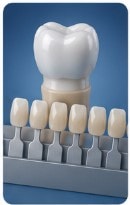
Your dentist matches a crown to your natural teeth using a shade guide — a set of standardized tooth-colored samples held next to your teeth in natural lighting. The lab then crafts the crown to match that shade, shape, and translucency. Modern digital shade-matching technology and skilled dental ceramists make today's crowns nearly indistinguishable from natural teeth, especially on front teeth.
What You'll Learn
The Shade Guide: How Color Is Selected
Tooth color is more complex than it appears. Natural teeth have variations in shade from the gumline to the tip, areas of translucency at the edges, and subtle undertones that vary from person to person. A simple paint-chip color match would look artificial.
Dentists use a standardized shade guide — most commonly the VITA Classical or VITA 3D-Master system — which contains dozens of tooth-colored samples organized by hue, value (lightness/darkness), and chroma (intensity). Your dentist holds these samples next to your teeth in natural lighting to find the closest match.
Digital Shade Matching
Many dental practices now use digital shade-matching devices called spectrophotometers or colorimeters. These instruments measure the exact color of your tooth and transmit precise data to the dental lab, reducing the subjectivity of visual shade selection.
Digital shade matching is particularly valuable for front teeth where an exact match is critical. The data gives the ceramist at the lab a precise target to work from, resulting in a more accurate and consistent color match.
What the Dental Lab Does
Once your dentist takes impressions (or a digital scan) and records the shade, this information goes to a dental laboratory where a skilled ceramist hand-crafts your crown. The ceramist layers porcelain or ceramic in multiple coats, building up the color, translucency, and surface texture to mimic a natural tooth.
For front teeth, the ceramist may add subtle characterizations — slight variations in color, surface texture, or translucency at the edges — to make the crown blend seamlessly with your surrounding teeth. This level of artistry is what separates a natural-looking crown from one that looks artificial.
Tips for the Best Color Match
Shade selection before whitening
If you are planning to whiten your teeth, do it before getting a crown. Crowns cannot be whitened after they are made. Your dentist will match the crown to your whitened shade.
Natural lighting matters
Shade selection is done in natural or full-spectrum lighting, not under the bright dental light. The overhead light can wash out color and lead to a mismatch.
Hydration affects shade
Dehydrated teeth appear lighter. Your dentist will select shade when your teeth are hydrated and at their natural color.
Front teeth require more precision
Back teeth are rarely visible when you smile, so a perfect match is less critical. Front teeth — especially the upper front six — require the most careful shade selection and lab work.
Frequently Asked Questions
Related Articles
What Are Dental Crowns Made Of?
A breakdown of crown materials — zirconia, ceramic, gold, and more.
Crown vs. Filling: How Does Your Dentist Decide?
The key factors that determine whether you need a filling or a crown.
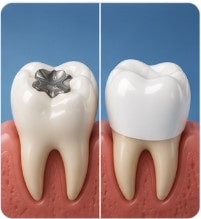
Can a Crown Get a Cavity?
Crowns protect teeth, but the tooth underneath can still be vulnerable.
What Happens If I Wait Too Long to Get a Crown?
Delaying a recommended crown can lead to more serious — and costly — problems.