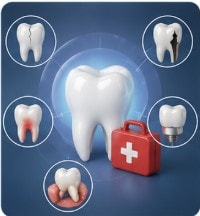
A comprehensive dental exam is a thorough evaluation of your teeth, gums, bite, jaw, and oral tissues. It typically includes a full set of X-rays, a visual exam, a gum health assessment, an oral cancer screening, and a review of your dental and medical history. Most comprehensive exams take 60–90 minutes and are recommended for new patients or every few years for established patients.
What You'll Learn
What Is a Comprehensive Dental Exam?
A comprehensive dental exam — sometimes called a full exam or new patient exam — is a complete evaluation of your entire oral health. Unlike a routine cleaning visit, a comprehensive exam is designed to give your dentist a full picture of your dental health from the ground up.
At Merchants Walk Dental in Marietta, we perform comprehensive exams for all new patients and periodically for established patients whose health or dental situation has changed. This exam forms the foundation of your personalized treatment plan.
What Does a Comprehensive Exam Include?
A comprehensive exam covers far more than just checking for cavities. Your dentist will evaluate every aspect of your oral health in a systematic way.
The exam typically includes a full set of diagnostic X-rays, a visual examination of all teeth surfaces, a periodontal (gum) assessment measuring pocket depths, an oral cancer screening of the lips, tongue, cheeks, and throat, a bite and jaw evaluation, and a review of your medical history and any medications you take.
Why Is a Comprehensive Exam Different from a Regular Checkup?
A routine checkup (also called a periodic exam) is a shorter visit — usually 15–20 minutes — that checks for changes since your last visit. It assumes your dentist already has a baseline understanding of your oral health.
A comprehensive exam builds that baseline. It is more thorough, takes longer, and often includes a full series of X-rays rather than just bitewings. If you are a new patient, have not seen a dentist in several years, or have experienced significant changes in your health, a comprehensive exam is the appropriate starting point.
What Happens Step by Step?
Medical and dental history review
Your dentist or hygienist will review your health history, medications, allergies, and any concerns you have. This helps identify risk factors and tailor the exam to your needs.
Diagnostic X-rays
A full series of X-rays (typically 18–20 images) is taken to see between teeth, below the gumline, and around the roots — areas invisible to the naked eye.
Periodontal assessment
Your hygienist measures the depth of the pockets between your teeth and gums. Healthy pockets are 1–3mm. Deeper pockets may indicate gum disease.
Visual tooth examination
Your dentist examines every tooth surface for decay, cracks, worn enamel, and existing restorations. They check for chips, fractures, and signs of grinding.
Oral cancer screening
Your dentist examines the soft tissues of your mouth — lips, cheeks, tongue, floor of mouth, and throat — for any unusual spots, lumps, or lesions.
Bite and jaw evaluation
Your dentist checks how your teeth come together, evaluates your jaw joints (TMJ), and looks for signs of clenching or grinding.
Treatment plan discussion
After the exam, your dentist reviews their findings with you, explains any concerns, and discusses recommended treatment — prioritized by urgency.
Frequently Asked Questions
Related Articles
Why Do Dentists Take X-Rays?
Understanding what dental X-rays reveal and why they matter.

Are Digital X-Rays Safe?
How digital X-rays compare to traditional film and what the radiation levels mean.

How Often Do I Need Dental X-Rays?
X-ray frequency depends on your age, risk level, and dental history.

What Is Considered a Dental Emergency?
Know when to call your dentist right away versus waiting for a regular appointment.