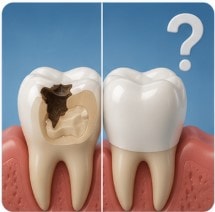
Dentists take X-rays because most dental problems — cavities between teeth, bone loss, infections, and cysts — are invisible to the naked eye. X-rays allow your dentist to see inside and between teeth, below the gumline, and around the roots of teeth. Without X-rays, many problems would go undetected until they become painful and far more expensive to treat.
What You'll Learn
What Can a Dentist See Without X-Rays?
Without X-rays, your dentist can only see the surfaces of your teeth that are directly visible — the tops and fronts of teeth, and the gum tissue around them. That accounts for a small fraction of what is actually happening in your mouth.
The spaces between teeth, the areas below the gumline, the roots of teeth, the surrounding jawbone, and the interior of the tooth itself are all completely hidden from a visual exam alone. This is where many of the most serious dental problems begin.
What Do Dental X-Rays Show?
Dental X-rays reveal a wide range of conditions that would otherwise go undetected until they cause pain or visible damage.
X-rays can detect cavities between teeth (interproximal decay) before they become visible, bone loss from gum disease, infections or abscesses at the root tip, cysts or tumors in the jaw, impacted teeth (including wisdom teeth), the depth and shape of tooth roots, the fit of existing crowns and fillings, and developmental issues in children.
Types of Dental X-Rays
Different types of X-rays serve different purposes. Your dentist selects the appropriate type based on what they need to evaluate.
Bitewing X-rays show the upper and lower back teeth and are the most common type — used to detect cavities between teeth and check bone levels. Periapical X-rays show the entire tooth from crown to root tip and are used to evaluate infections, root length, and bone around the root. Panoramic X-rays capture the entire mouth in one image and are used to evaluate wisdom teeth, jaw structure, and overall dental development. Full-mouth series (FMX) combines multiple periapical and bitewing images for a complete picture of all teeth.
Why Early Detection Matters
Cavities caught early are smaller and cheaper to fix
A cavity detected between two teeth on an X-ray might be a simple filling. The same cavity left undetected for another year may reach the nerve — requiring a root canal and crown.
Bone loss is silent until it is advanced
Gum disease destroys the bone that holds your teeth in place. X-rays show bone levels so your dentist can catch and treat bone loss before teeth become loose.
Infections can spread without symptoms
A tooth abscess can exist for months without causing obvious pain. Left untreated, infections can spread to the jaw, neck, and in rare cases become life-threatening.
Impacted teeth cause damage to neighbors
Wisdom teeth and other impacted teeth can push against adjacent teeth, causing crowding, decay, and damage — all visible on X-rays before symptoms appear.
Frequently Asked Questions
Related Articles
Are Digital X-Rays Safe?
How digital X-rays compare to traditional film and what the radiation levels mean.
How Often Do I Need Dental X-Rays?
X-ray frequency depends on your age, risk level, and dental history.

What Happens During a Comprehensive Dental Exam?
A step-by-step look at what your dentist checks during a full exam.
Can a Cavity Heal Itself?
The truth about remineralization and when a cavity needs treatment.