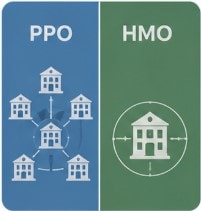
PPO (Preferred Provider Organization) plans give you the freedom to see any dentist — in-network or out-of-network — and typically offer better coverage flexibility. HMO (Health Maintenance Organization) plans require you to choose a primary care dentist from a specific network and usually have lower premiums, but less flexibility. For most patients who want to choose their own dentist, a PPO plan is the better fit.
What You'll Learn
What Is a PPO Dental Plan?
A PPO plan contracts with a network of dentists who agree to provide services at negotiated (discounted) rates. However, you are not required to stay within that network — you can see any licensed dentist, in-network or out-of-network.
How PPO coverage typically works:
In-network: You pay the negotiated rate; insurance covers its share (e.g., 80% for basic, 50% for major)
Out-of-network: You can still use your benefits, but you may pay more — the dentist's fee may exceed what insurance considers "usual and customary"
No referrals needed to see a specialist
Annual deductible and annual maximum apply
Waiting periods may apply for major services
PPO plans are the most common type of dental insurance and offer the most flexibility.
What Is an HMO Dental Plan?
An HMO plan (sometimes called a DHMO — Dental Health Maintenance Organization) requires you to select a primary dentist from a specific network. All of your care must be coordinated through that dentist, and referrals are required to see a specialist.
How HMO coverage typically works:
You must choose a primary dentist from the plan's network
Services are only covered when provided by in-network providers
Copays are fixed (e.g., $20 for a cleaning, $50 for a filling) — no deductibles or annual maximums
Premiums are typically lower than PPO plans
Referrals required for specialists
HMO plans can be a good value if you are comfortable with the network and do not need to see specialists frequently.
PPO vs. HMO — Side-by-Side Comparison
| Factor | PPO | HMO |
|---|---|---|
| Choose your own dentist | Yes (in or out of network) | No (must use network) |
| Out-of-network coverage | Yes (at higher cost) | No |
| Referrals needed | No | Yes |
| Deductible | Yes | No |
| Annual maximum | Yes | No |
| Copays | Coinsurance (%) | Fixed dollar amounts |
| Monthly premium | Higher | Lower |
| Flexibility | High | Low |
| Best for | Patients who want choice | Cost-conscious patients in a strong network |
Which Plan Is Right for You?
✅ Choose a PPO if:
- You want to keep your current dentist (or choose any dentist)
- You value flexibility and do not want to be restricted to a network
- You are willing to pay a higher premium for more coverage options
- You may need specialist care (orthodontics, oral surgery, implants)
💰 Choose an HMO if:
- You are primarily cost-driven and want lower monthly premiums
- You are comfortable with the dentists available in the plan's network
- You do not anticipate needing out-of-network care
- You are okay with fixed copays and no annual maximum
A Note About Merchants Walk Dental
We are an out-of-network provider for most insurance plans. This means:
If you have a PPO plan, you can use your out-of-network benefits at our office — we will file the claim on your behalf
If you have an HMO plan, your plan will likely not cover services at our office (HMOs typically do not cover out-of-network care at all)
We accept most PPO plans and will provide a cost estimate before any treatment begins. If you are unsure whether your plan covers our office, call us and we will help you find out.
Frequently Asked Questions
Related Learning Center Articles
How Does Dental Insurance Work?
Understand the 100-80-50 rule, annual maximums, and how to maximize your benefits.

Crown vs. Filling: How Does Your Dentist Decide?
Learn when a filling is enough and when a crown is necessary.
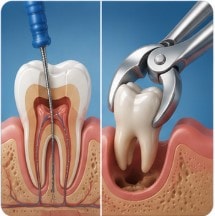
Root Canal vs. Extraction: Which Is Right for You?
Understand the key differences and how to decide which option is best.
Invisalign vs. Braces: Which Is Right for You?
Compare clear aligners and traditional braces to find the right fit.